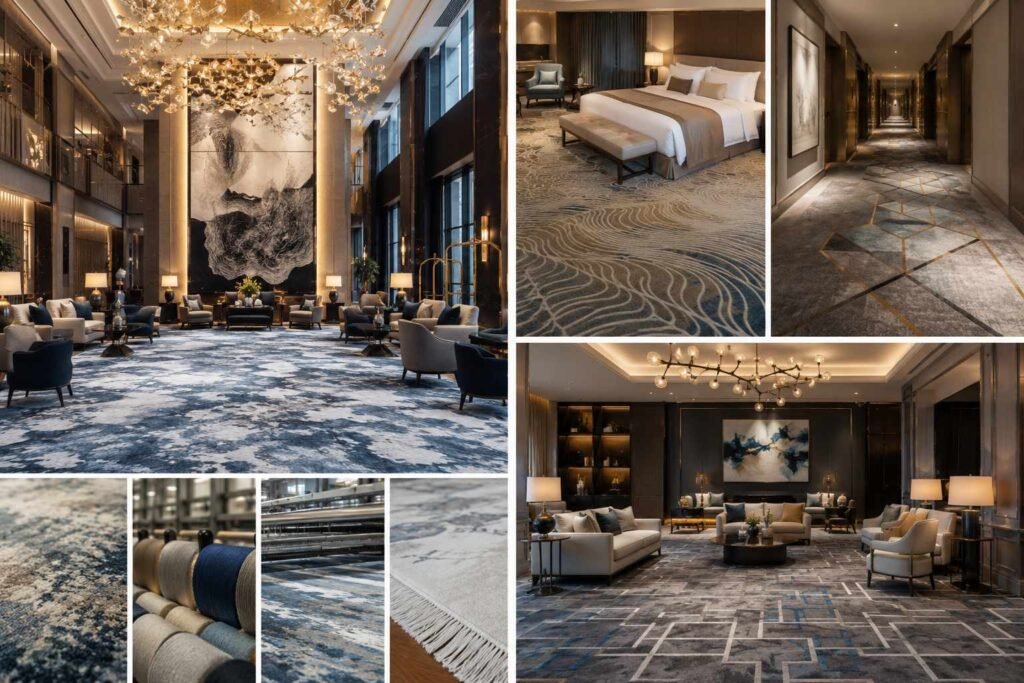
Bespoke Carpet Manufacturer for Project-Specific Interiors
Scalane International is a bespoke carpet manufacturer in India developing project-specific carpets for architects, interior designers, hospitality projects, commercial interiors, residential developments and other architectural applications.
Bespoke carpet manufacturing allows the carpet to be developed according to the requirements of a particular project rather than selected solely from a standard collection.
Project specifications can include:
- Pattern
- Color
- Dimensions
- Material
- Texture
- Construction
- Surface characteristics
- Performance requirements
- Packaging
- Delivery requirements
Scalane International supports the process from design development and sampling through production, quality inspection and international supply coordination.
What Is a Bespoke Carpet?
A bespoke carpet is a carpet developed specifically for an individual project or defined interior requirement.
Instead of selecting a standard carpet design, the project team can work with the manufacturer to establish the required:
- Design
- Dimensions
- Colors
- Materials
- Texture
- Construction
- Performance characteristics
The final carpet is therefore developed around the project’s specifications.
What Does a Bespoke Carpet Manufacturer Do?
A bespoke carpet manufacturer converts project requirements into a defined carpet product for production.
The process can include:
- Project consultation
- Design interpretation
- Pattern development
- Color development
- Material selection
- Construction selection
- Sampling
- Sample approval
- Production
- Quality inspection
- Packaging
- Delivery coordination
The exact process depends on the complexity of the project and the approved product specification.
Bespoke Carpet vs Standard Carpet
| Feature | Bespoke Carpet | Standard Carpet |
|---|---|---|
| Design | Developed for a defined project | Selected from an existing collection |
| Dimensions | Project-specific | Standard available dimensions |
| Color | Can be developed to specification | Existing color options |
| Material | Selected according to requirements | Predetermined product specification |
| Sampling | Project approval process | Existing product sample |
| Production | Made according to approved specification | Standard production |
| Application | Specific project requirements | General product use |
The main distinction is that a bespoke carpet is developed around the requirements of the project.
Bespoke Carpet Design Process
1. Project Brief
The process begins with the project requirements.
Information may include:
- Project type
- Room or installation area
- Dimensions
- Design direction
- Color requirements
- Expected use
- Performance requirements
- Quantity
- Delivery schedule
2. Design Development
The design is developed according to the project brief.
Depending on the project, this can involve:
- Pattern interpretation
- Motif development
- Geometric arrangements
- Linear compositions
- Tonal designs
- Repeating patterns
- Project-specific artwork
The design is refined before the final production specification is established.
3. Color Development
Color can be developed according to the approved interior palette or project requirements.
Possible considerations include:
- Base colors
- Accent colors
- Tonal variations
- Color combinations
- Interior coordination
- Approved color references
The final color specification should be confirmed before production.
4. Material Selection
Material selection depends on the required appearance, construction, expected use and project specifications.
Potential considerations include:
- Fiber characteristics
- Surface appearance
- Texture
- Durability requirements
- Maintenance requirements
- Budget
- Project positioning
The material is selected as part of the overall carpet specification rather than as a standalone feature.
5. Sampling
Sampling allows the project team to evaluate the proposed carpet before production.
A sample may be reviewed for:
- Color
- Pattern
- Texture
- Surface appearance
- Construction
- Dimensions
- Overall design interpretation
Any required changes can be incorporated before production approval.
6. Production Approval
Once the design and product specifications are approved, the final manufacturing requirements are confirmed.
These may include:
- Final dimensions
- Approved design
- Material
- Construction
- Color
- Quantity
- Finishing requirements
- Packaging requirements
7. Manufacturing
The approved carpet is manufactured according to the agreed production specification.
Production controls depend on the selected construction and project requirements.
8. Quality Inspection
Finished carpets are inspected against the approved specifications before packaging and dispatch.
9. Packaging & Delivery
The finished carpets are prepared for transportation according to the agreed packaging and delivery requirements.
Bespoke Carpet Design Capabilities
Bespoke carpet projects can incorporate different design requirements.
Pattern Development
Possible design directions include:
- Geometric patterns
- Linear patterns
- Repeating motifs
- Tonal compositions
- Organic patterns
- Project-specific artwork
Color Development
Possible requirements include:
- Custom color palettes
- Interior color coordination
- Multiple color combinations
- Tonal variations
- Project-specific color references
Texture Development
Depending on the selected construction, projects can incorporate:
- Surface variation
- Pile variation
- Texture changes
- Dimensional effects
- Defined surface patterns
Dimensional Development
Bespoke carpet dimensions can be established according to:
- Room dimensions
- Project layouts
- Installation areas
- Design requirements
- Production limitations
Who Uses Bespoke Carpet Manufacturing?
Architects
Architects use bespoke carpets to create flooring systems that align with overall building concepts and spatial planning.
Interior Designers
Interior designers develop custom carpet concepts that complement furniture, finishes, lighting, artwork, and branding elements.
Hospitality Developers
Luxury hotels, resorts, and branded hospitality projects often require project-exclusive flooring solutions.
Luxury Residential Projects
Villas, penthouses, private residences, and estate developments frequently utilize bespoke carpets to create unique interior environments.
Commercial Luxury Spaces
Executive offices, premium retail stores, showrooms, and hospitality lounges increasingly incorporate designer carpet solutions.
Bespoke Carpet Construction
The appropriate construction depends on the design, dimensions, surface requirements, expected use and project specifications.
Construction selection may consider:
- Surface structure
- Pile characteristics
- Density
- Pattern definition
- Texture
- Durability
- Maintenance requirements
The final construction is agreed during product development and sampling.
This approach allows the construction to remain project-led, rather than turning individual construction methods into separate product categories.
Bespoke Carpet Specifications
Before production, the carpet should have a clearly defined specification.
| Specification | Example Requirement |
|---|---|
| Design | Approved project artwork |
| Dimensions | Required room or installation size |
| Color | Approved color reference |
| Material | Selected project material |
| Construction | Agreed manufacturing method |
| Texture | Required surface characteristics |
| Quantity | Project requirement |
| Finishing | Approved edge/surface treatment |
| Packaging | Agreed shipment format |
| Destination | Delivery location |
A clear specification helps maintain consistency between the approved sample and production.
Bespoke Carpet Quality Control
Quality control should be based on the approved project specification.
Typical inspection points can include:
Dimensions
Pattern alignment
Color consistency
Surface appearance
Material verification
Construction consistency
Edge finishing
Quantity
Packaging condition
For larger projects, the approved sample can serve as a reference for production inspection.
Bespoke Carpet Sampling
Sampling is an important stage of bespoke carpet development because it allows the project team to review the proposed product before larger-scale manufacturing.
A sample can help evaluate:
Design interpretation
Color
Texture
Material
Construction
Surface appearance
Once the sample is approved, the final specifications can be used as the production reference.
Bespoke Carpet Manufacturing for International Buyers
Scalane International supports international buyers through the stages required for project-specific carpet supply.
International supply support can include:
Product specification coordination
Sampling
Production coordination
Quality inspection
Packaging
Export documentation support
Shipment coordination
Delivery planning
Buyers should provide the destination, required quantities, specifications and project schedule when requesting information.
How to Choose a Bespoke Carpet Manufacturer in India
When selecting a bespoke carpet manufacturer, buyers should evaluate the manufacturer’s ability to manage the complete development process.
Design Development
Can the manufacturer work from the project’s design references and requirements?
Sampling
Can samples be developed and reviewed before production?
Material Selection
Can the manufacturer provide appropriate material options for the project?
Manufacturing
Can the approved design and construction be produced consistently?
Quality Control
Are finished carpets inspected against the approved specifications?
Project Coordination
Can the manufacturer coordinate multiple specifications, quantities and delivery requirements?
International Supply
Can the supplier support packaging, documentation and international shipment requirements?
These factors provide a practical framework for evaluating a bespoke carpet manufacturer.
Why Bespoke Carpet Manufacturing?
Bespoke manufacturing can be appropriate when an existing standard carpet does not meet the requirements of a particular project.
It allows the project team to coordinate:
Design
Color
Dimensions
Materials
Texture
Construction
Performance requirements
within one defined product specification.
This makes bespoke carpet manufacturing particularly relevant to projects where the flooring needs to coordinate closely with the overall interior concept.
Bespoke Carpet Production Process at a Glance
Project Brief
↓
Design Development
↓
Color & Material Selection
↓
Sampling
↓
Approval
↓
Manufacturing
↓
Quality Inspection
↓
Packaging
↓
International Delivery
This structured process helps maintain alignment between the project requirements, approved sample and final production.
Frequently Asked Questions
What is a bespoke carpet manufacturer?
A bespoke carpet manufacturer develops carpets specifically for individual projects according to requirements such as design, dimensions, color, material, construction and texture.
What makes a carpet bespoke?
A carpet is bespoke when it is developed around the requirements of a particular project rather than simply selected from an existing standard collection.
Can bespoke carpets be manufactured in India?
Yes. Bespoke carpets can be developed and manufactured in India according to agreed project specifications.
Can architects provide their own carpet designs?
Yes. Architects and interior designers can provide drawings, artwork, references, dimensions or other design information for consideration during product development.
Can bespoke carpets be made in custom dimensions?
Yes. Project-specific dimensions can be incorporated into the carpet specification, subject to the requirements of the selected construction.
Can the carpet color be customized?
Color requirements can be developed according to the approved project specification and available production parameters.
Are samples available before production?
Sampling can be used to review the design, color, material, texture and construction before production approval.
What projects use bespoke carpets?
Bespoke carpets can be developed for hospitality, residential, commercial and architectural interior projects.
Can bespoke carpets be manufactured for hotels?
Yes. Bespoke carpets can be developed for hotel guestrooms, public areas, lounges, reception areas and other project spaces according to the required specifications.
What materials can be used for bespoke carpets?
Material options depend on the required construction, appearance, performance, maintenance requirements and project specifications.
How is bespoke carpet quality controlled?
Quality can be checked against the approved sample and product specification, including dimensions, color, pattern, construction, surface appearance and finishing.
Can bespoke carpets be supplied internationally?
Yes. International supply can include production coordination, quality inspection, packaging, documentation and shipment support.
What information should I provide when requesting a bespoke carpet quotation?
Provide the project type, dimensions, design reference, colors, material preferences, quantity, destination and required schedule.
How long does bespoke carpet production take?
The timeline depends on the design-development process, sampling, approval, construction, quantity and production schedule. A project-specific timeline should be confirmed after the requirements are reviewed.
Request Bespoke Carpet Design & Sampling
Planning a project that requires a bespoke carpet manufacturer in India?
Share your project requirements, design references, dimensions, materials, quantities and destination with Scalane International.
We can discuss:
Bespoke carpet design
Project specifications
Material options
Sampling
Production
Quality inspection
Packaging
International supply