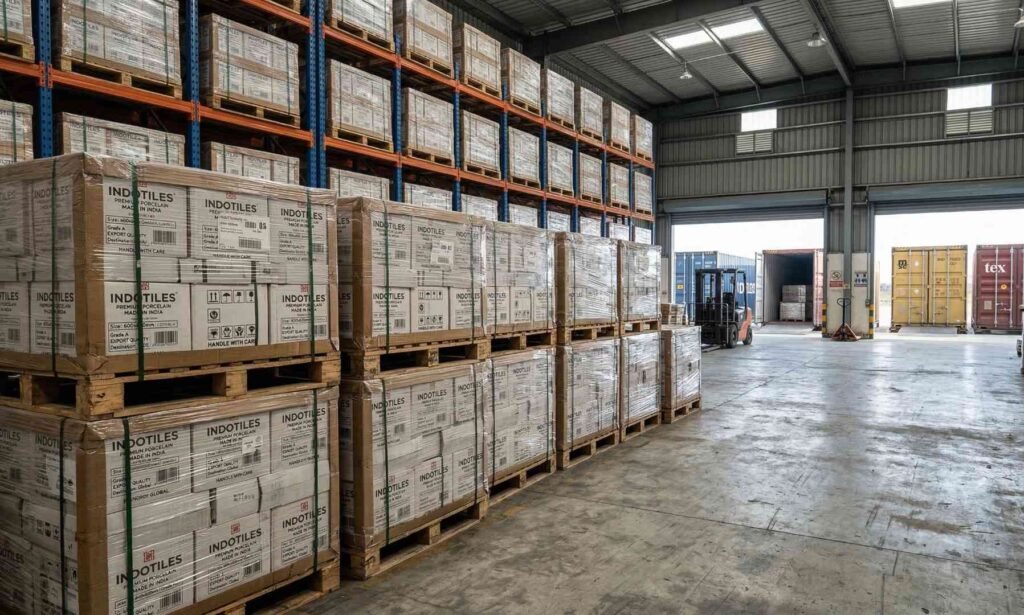
Reliable porcelain tile manufacturer and exporter from India supplying distributors, wholesalers, construction companies, and project developers worldwide.
India has established itself as one of the fastest-growing global suppliers of ceramic and porcelain tiles. Backed by advanced manufacturing technology, large-scale production facilities, and well-developed export logistics, Indian tile manufacturers consistently supply porcelain tiles to international markets across Europe, the Middle East, Africa, North America, and Latin America.
Scalane International is a trusted porcelain tiles exporter from India, specialising in the global supply of porcelain tiles, ceramic tiles, vitrified tiles, and GVT / PGVT tiles. We support international importers with reliable sourcing, rigorous quality control, and professional export coordination.
As an experienced porcelain tile supplier in India, we work with distributors, wholesalers, and construction project buyers who need durable, design-forward porcelain tiles suited to residential, commercial, and infrastructure applications.
Porcelain Tiles Exporter from India – Overview
Global demand for porcelain tiles
Porcelain tiles have become a material of choice in modern construction — valued for their durability, design flexibility, and low maintenance requirements. Architects, developers, and designers consistently turn to porcelain tiles because they deliver the visual appeal of natural materials alongside superior mechanical performance.
In recent years, global demand has grown significantly as construction activity accelerates in urban centres and infrastructure projects expand worldwide. Large-format tiles, marble-look surfaces, and outdoor porcelain paving are among the most sought-after products in contemporary architectural specifications.
India as a major porcelain tile manufacturing hub
India ranks among the world’s largest ceramic and porcelain tile producers. The country’s tile industry has expanded rapidly, driven by sustained investment in modern manufacturing technology and large-scale production capacity.
The Morbi ceramic cluster in Gujarat is recognised as one of the largest tile manufacturing regions in the world. Hundreds of factories within this region produce porcelain and vitrified tiles for global markets, supported by advanced digital printing systems, automated production lines, and high-capacity kilns that ensure consistent quality and competitive supply capabilities.
Serving global distributors and construction projects
As a professional porcelain tiles exporter from India, Scalane International works with a wide range of international buyers, including:
-
- Tile importers and distributors
-
- Building material wholesalers
-
- Real estate developers
-
- Construction contractors
-
- Architects and interior designers
Our export-focused approach ensures that every global buyer receives reliable supply, supported by complete export documentation and end-to-end logistics management.
What Are Porcelain Tiles?
Answer Block
Question: What are porcelain tiles?
Answer: Porcelain tiles are high-density ceramic tiles manufactured from refined clay and natural minerals, pressed and fired at extremely high temperatures. This process creates tiles with very low water absorption — typically below 0.5% — which gives them exceptional strength, durability, and resistance to stains and moisture. These properties make porcelain tiles a preferred choice for flooring, wall cladding, outdoor areas, and high-traffic commercial environments.
Porcelain tile classification
Porcelain tiles are classified under internationally recognised standards, including EN 14411 and ISO 13006. Under these standards, porcelain tiles fall within Group BIa, meaning they achieve a water absorption rate of 0.5% or less.
Compared to standard ceramic tiles, porcelain tiles offer:
-
- Higher density
-
- Greater mechanical strength
-
- Lower porosity
-
- Improved long-term durability
These characteristics make porcelain tiles equally well-suited to residential interiors and demanding commercial applications.
Key Specifications of Porcelain Tiles
Tile dimensions and formats
Porcelain tiles are manufactured in a wide range of sizes to accommodate varying design and installation requirements. Common formats exported globally include:
-
- 600 × 600 mm
-
- 600 × 1200 mm
-
- 800 × 800 mm
-
- 1200 × 1200 mm
-
- 800 × 1600 mm
Large-format porcelain slabs are increasingly specified for modern interiors, where minimal grout lines create seamless, uninterrupted surfaces.
Typical tile thickness
Tile thickness is determined by the intended application:
-
- 6–10 mm for wall tiles
-
- 8–10 mm for indoor floor tiles
-
- 20 mm for outdoor porcelain paving
Thicker tiles provide the structural strength required for outdoor and heavy-duty environments.
Surface finishes
Porcelain tiles are produced in a range of finishes, including:
-
- Polished porcelain tiles
-
- Matte porcelain tiles
-
- Structured or textured surfaces
-
- Anti-slip outdoor finishes
Each finish is designed to perform in specific settings, from elegant interior spaces to high-traffic outdoor areas.
Durability characteristics
Porcelain tiles are recognised for outstanding durability. Key performance properties include:
-
- High breaking strength
-
- Abrasion resistance
-
- Scratch resistance
-
- Chemical resistance
-
- Freeze-thaw resistance
These characteristics make porcelain tiles a reliable choice for environments where performance over the long term is a priority.
Water absorption properties
A defining feature of porcelain tiles is their extremely low water absorption — typically ≤ 0.5%. This translates to:
-
- Resistance to moisture penetration
-
- Improved stain resistance
-
- Suitability for wet and humid areas
-
- Durability across outdoor and variable climates
Advantages of Porcelain Tiles
High mechanical strength
Porcelain tiles are pressed under high pressure and fired at high temperatures, producing a dense tile body capable of supporting heavy loads without compromising structural integrity.
Low water absorption
The low porosity of porcelain tiles prevents water from penetrating the surface, making them a practical and durable choice for bathrooms, kitchens, and outdoor installations.
Scratch and abrasion resistance
Porcelain tiles maintain their surface appearance even under sustained heavy foot traffic, making them well-suited to busy commercial and public environments.
Long-term flooring durability
The dense structure of porcelain tiles translates directly into long service life and minimal maintenance requirements — an important consideration for both residential and commercial buyers.
Applications of Porcelain Tiles
Residential applications
Porcelain tiles are widely used throughout homes for:
-
- Living room flooring
-
- Kitchens
-
- Bathrooms
-
- Balconies
-
- Terraces
Commercial flooring
Commercial environments rely on porcelain tiles for their durability and visual appeal. Common applications include:
-
- Retail stores
-
- Office buildings
-
- Commercial complexes
Hospitality and hotel projects
Porcelain tiles are a standard specification in hospitality fit-outs, including:
-
- Hotel lobbies
-
- Corridors
-
- Guest rooms
-
- Restaurants
Public infrastructure
Large-scale public spaces also depend on porcelain tiles for performance and longevity, including:
-
- Shopping malls
-
- Airports
-
- Hospitals
-
- Educational institutions
Popular Finishes and Designs in Porcelain Tiles
Marble look porcelain tiles
Marble-look porcelain tiles replicate the visual richness of natural marble while delivering superior durability and significantly lower maintenance requirements.
Stone look porcelain tiles
Stone-look tiles bring natural aesthetics to both interiors and exteriors, offering improved durability compared to real stone with none of the associated maintenance challenges.
Wood look porcelain tiles
Wood-effect porcelain tiles combine the warmth and character of timber with the strength and moisture resistance that only porcelain can provide.
Polished porcelain tiles
Polished tiles create bright, reflective surfaces that enhance the sense of space and light in interior environments.
Matte porcelain tiles
Matte finishes offer a contemporary, understated look while providing improved slip resistance — a practical choice for both residential and commercial applications.
Porcelain Tile Manufacturing Technology
Raw material preparation
Porcelain tiles are produced from carefully refined clay, feldspar, quartz, and other minerals, processed to ensure a consistent and homogeneous composition throughout production.
Dry pressing process
Raw materials are pressed under high pressure to form dense tile bodies with precise dimensions and uniform density.
Digital printing technology
Modern digital printing systems reproduce highly realistic surface patterns — including marble, wood, and natural stone textures — with exceptional detail and consistency across large production runs.
High-temperature kiln firing
Tiles are fired in kilns at temperatures exceeding 1200°C. This process vitrifies the tile body, creating the structural strength and low porosity that define porcelain tiles.
Finishing processes
Post-firing finishing processes may include glazing, polishing, and rectification. Rectified tiles are precision-cut to exact dimensions, allowing for narrower grout joints and cleaner installation results.
Export Packaging and Logistics for Porcelain Tiles
Tile packaging for export
Porcelain tiles are packed in strong corrugated cartons engineered to the specific size and weight of each tile format. Internal separators protect tile edges and surfaces throughout transit.
Palletization
Cartons are stacked on pallets and secured using PET or steel strapping, stretch wrapping, and protective corner boards. Export pallets comply with ISPM-15 international fumigation standards.
Container loading
Porcelain tiles are shipped in 20-foot containers for heavier loads and 40-foot containers for mixed or higher-volume shipments. Careful pallet placement within each container ensures safe and stable transport.
Breakage prevention during shipping
Export packaging incorporates reinforced cartons, moisture protection, pallet stabilisation, and container bracing. These measures work together to minimise the risk of damage during long sea voyages.
Quality Inspection and Testing Before Export
Physical performance testing
Prior to shipment, porcelain tiles are tested for water absorption, breaking strength, and abrasion resistance.
Surface performance testing
Surface properties evaluated include slip resistance, stain resistance, and chemical resistance.
Dimensional accuracy checks
Quality control teams verify tile size consistency, thickness uniformity, and flatness and edge precision on every production batch.
Compliance with international standards
Testing is conducted in accordance with internationally recognised standards, including EN 14411, ISO 13006, and ISO 10545. Compliance with these standards ensures global acceptance of Indian porcelain tile products across regulated markets.
Why Global Importers Source Porcelain Tiles from India
Large manufacturing ecosystem
India has one of the world’s largest and most developed ceramic tile manufacturing industries, providing buyers with access to an extensive range of products and production capabilities.
Morbi ceramic cluster
The Morbi ceramic cluster in Gujarat is one of the largest tile production hubs in the world, home to hundreds of manufacturers producing porcelain and vitrified tiles at scale for international markets.
Competitive production capabilities
Indian manufacturers combine advanced technology, large production capacity, and flexible customisation to meet the specific needs of global buyers across a wide range of product categories.
Global export experience
Indian exporters have a well-established track record of supplying porcelain tiles to Europe, the Middle East, North America, Africa, and Latin America, with the infrastructure and expertise to support reliable international supply.
About Scalane International
Scalane International is an export-focused company supplying ceramic and porcelain tiles from India to international buyers across the world.
Our product portfolio includes porcelain tiles, ceramic tiles, vitrified tiles, GVT tiles, and PGVT tiles. We work in close partnership with leading manufacturers across India’s ceramic industry to provide consistent, reliable supply for global buyers.
Global supply capabilities
Scalane International supports international clients with container load shipments, comprehensive export documentation, product sourcing and quality control, and international logistics coordination.
Why Importers Choose Scalane International
Global buyers partner with Scalane International for our commitment to reliability, product consistency, and export professionalism.
Our key strengths include:
-
- Consistent product quality across all shipments
-
- Strong, long-term manufacturing partnerships
-
- Reliable export logistics and on-time delivery
-
- Transparent technical specifications and documentation
-
- Responsive communication with international clients
Frequently Asked Questions
What are porcelain tiles and why are they widely used in construction? Porcelain tiles are high-density ceramic tiles produced from refined clay and minerals fired at high temperatures. Their low water absorption and exceptional durability make them an ideal choice for floors, walls, and outdoor environments in both residential and commercial projects.
Why do global importers source porcelain tiles from India? Importers choose India for its large production capacity, advanced manufacturing technology, and well-established export infrastructure. The Morbi ceramic cluster in particular offers access to a wide range of products at competitive production scales.
What certifications should a porcelain tile exporter provide? Reliable exporters work with manufacturers that comply with standards such as EN 14411, ISO 13006, and ISO 9001, supported by ISO 10545 testing methods for key performance properties.
How can importers verify porcelain tile quality? Buyers can review technical data sheets and laboratory test reports, and arrange third-party inspections prior to shipment to independently verify product quality.
What tile sizes are commonly exported from India? Common export formats include 600×600 mm, 600×1200 mm, 800×800 mm, and 1200×1200 mm, with large-format slabs also available for modern architectural applications.
How are porcelain tiles manufactured? Porcelain tiles are produced by pressing refined clay mixtures under high pressure and firing them at temperatures exceeding 1200°C, creating a dense, vitrified structure with exceptional strength and low porosity.
How are porcelain tiles packaged for export? Tiles are packed in reinforced cartons, palletised, strapped, and loaded into ocean freight containers, with multiple layers of protection to ensure safe arrival at the destination port.
What container types are used for tile exports? Most shipments use 20-foot or 40-foot ocean freight containers, selected based on load weight and total shipment volume.
Are porcelain tiles suitable for commercial construction projects? Yes. Porcelain tiles are widely specified for shopping malls, hotels, airports, hospitals, and office buildings due to their durability, ease of maintenance, and broad range of available designs.
What slip resistance rating is suitable for outdoor tiles? Outdoor porcelain tiles are typically produced with textured or structured surfaces that achieve higher slip resistance ratings, improving safety in wet and open-air conditions.
What documents are required to export porcelain tiles from India? Standard export documentation includes a commercial invoice, packing list, certificate of origin, shipping bill, and bill of lading.
How do porcelain tiles perform in outdoor climates? The low water absorption and high density of porcelain tiles make them well-suited to outdoor environments and variable climates, including regions with extreme temperatures or high moisture exposure.
Request Porcelain Tile Catalogue Contact Scalane International to receive our latest porcelain tile catalogue, prepared specifically for distributors and project buyers.
Request Samples Global buyers are welcome to request tile samples to evaluate quality, design, and surface finish before committing to bulk orders.
Request Quotation for Bulk Orders For container shipments or long-term supply partnerships, contact the Scalane International export team to receive a detailed quotation.