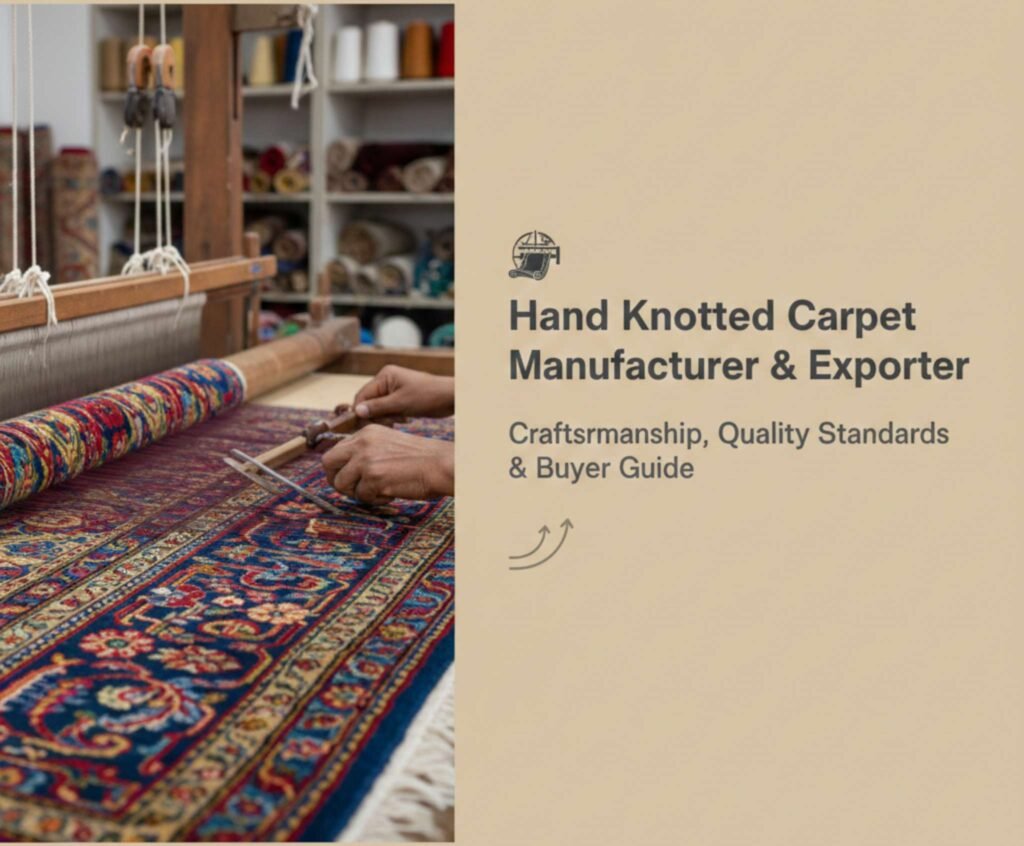
Hand knotted carpet manufacturers represent the pinnacle of craftsmanship in the global floor covering industry, supplying premium handmade carpets to importers, wholesalers, retailers, and hospitality project buyers worldwide. For importers, wholesalers, retailers, and hospitality project buyers, these aren’t just decorative products—they’re long-term investments in quality, authenticity, and brand value.
As a hand-knotted carpet exporter from India, Scalane International works with global buyers who prioritize ethical sourcing, consistent quality, and export-ready compliance. This guide helps B2B buyers understand how hand-knotted carpets are made, how quality is measured, which certifications matter, and how to choose the right manufacturer and exporter with confidence.
Why Hand-Knotted Carpets Remain the Gold Standard in Global Trade
Despite advances in machine-made and hand-tufted carpets, hand-knotted rugs continue to dominate the premium segment of the global carpet market. Buyers across North America, Europe, the UK, and the Middle East increasingly favor authentic hand-knotted carpets for their durability, artisanal value, and sustainability credentials.
India has emerged as one of the most reliable sourcing destinations, blending centuries-old weaving traditions with modern export compliance and customization capabilities. Many global importers now prefer working directly with a hand-knotted rug manufacturer in India rather than through intermediaries. Scalane International operates as a hand knotted carpet manufacturer serving global buyers with export-ready handmade carpet solutions.
Buyers continue to choose hand-knotted carpets for several compelling reasons:
-
- Superior lifespan compared to tufted or machine-made alternatives
-
- Higher perceived value in retail and hospitality projects
-
- Greater design flexibility for custom sizes, colors, and patterns
-
- Strong alignment with ethical and sustainable sourcing expectations
What Is a Hand-Knotted Carpet?
How Hand-Knotted Carpets Are Made
A hand-knotted carpet is created by tying individual knots by hand onto a vertical loom. Each knot wraps around the warp threads and is secured with weft yarns, forming the carpet’s pile surface.
The process involves several key steps:
-
- A cotton or wool warp stretched vertically on the loom
-
- Individual pile yarns (wool, silk, or blends) tied knot by knot
-
- Horizontal weft threads compacting each row of knots
-
- Manual trimming and finishing after weaving is complete
Because every knot is tied by hand, production time increases with design complexity and knot density. This labor-intensive process gives hand-knotted carpets their exceptional durability, texture, and long-term value.
Hand-Knotted vs Hand-Tufted vs Machine-Made Carpets
Understanding these differences is critical for importers and distributors:
Hand-knotted carpets
-
- Fully handmade, knot by knot
-
- No adhesive backing required
-
- Extremely durable and repairable
-
- Preferred for premium retail and hospitality settings
Hand-tufted carpets
-
- Yarn inserted using tufting guns
-
- Latex backing holds the pile in place
-
- Faster production but shorter lifespan
Machine-made carpets
-
- Automated production
-
- Uniform appearance but limited durability
-
- Lower resale and brand value
From a compliance and authenticity standpoint, only hand-knotted carpets meet the expectations of buyers seeking genuine hand-knotted carpet exporters.
Craftsmanship & Materials That Define Premium Hand-Knotted Carpets
Materials Used in Hand-Knotted Carpets
Material selection directly affects durability, appearance, and market positioning.
Wool
The most widely used material in hand-knotted carpets. Wool is naturally resilient, flame-resistant, and retains color exceptionally well. Wool hand-knotted carpets suit both residential and commercial applications.
Silk and Wool-Silk Blends
Silk enables finer knotting and intricate detailing. Wool-silk blends balance durability with visual elegance, making them ideal for premium collections.
Cotton Foundation
Cotton is commonly used for warp and weft threads due to its strength and stability, replacing traditional jute in higher-quality carpets.
Bamboo Silk and Hemp
Increasingly popular among sustainability-focused buyers. These materials offer a silk-like sheen or enhanced strength with a lower environmental impact.
Scalane International works with multiple material options to meet diverse buyer requirements across global markets.
Natural vs Synthetic Dyes – What Importers Should Know
Color quality is a major concern for importers, particularly in markets with strict consumer safety regulations.
Natural dyes
-
- Derived from plants and minerals
-
- Known for rich, organic tones
-
- Favored by eco-conscious buyers
Synthetic dyes
-
- Offer consistent shade reproduction
-
- Tested for colorfastness and safety
-
- Commonly used for large-scale export orders
Reputable exporters ensure all dyes meet OEKO-TEX® and EU safety standards, reducing the risk of color bleeding or regulatory issues.
Understanding KPSI (Knots Per Square Inch) – The Core Quality Metric
What Is KPSI and Why It Matters
KPSI refers to the number of knots per square inch on a carpet’s surface. It’s one of the most important quality indicators in hand-knotted carpets.
Higher KPSI typically means:
-
- Finer detailing
-
- Smoother texture
-
- Longer production time
-
- Greater durability
Quality Categories Based on KPSI
-
- Standard quality: Suitable for functional use with simpler designs
-
- Fine quality: Balanced detailing and durability
-
- Super fine and masterwork: Highly intricate designs requiring expert weavers and extended timelines
Buyers should align KPSI expectations with intended use—whether for residential spaces, retail display, or luxury hospitality.
How Buyers Verify KPSI
Importers can verify KPSI using a straightforward method:
-
- Turn the carpet over
-
- Count knots vertically and horizontally within one inch
-
- Multiply the two numbers
This simple verification helps buyers confirm authenticity and avoid misrepresentation.
Quality Control Standards in Hand-Knotted Carpet Manufacturing
Key Quality Checks Before Export
Professional hand-knotted carpet suppliers follow multi-stage inspection processes:
-
- Knot density consistency
-
- Pile height uniformity
-
- Colorfastness testing
-
- Design and dimension verification
Each inspection stage reduces the risk of defects in bulk orders.
Common Quality Risks in Bulk Orders
Bulk buyers often have concerns about:
-
- Shade variation between pieces
-
- Inconsistent knot density
-
- Fringe and edge finishing issues
Established exporters mitigate these risks through standardized yarn sourcing, controlled dyeing processes, and thorough final inspections before shipment.
Certifications & Compliance Buyers Expect From Exporters
Ethical & Social Compliance Certifications
-
- GoodWeave
-
- Care & Fair
-
- BSCI
These certifications are essential for buyers concerned about child labor compliance and ethical sourcing practices.
Product Safety & Material Certifications
-
- OEKO-TEX® STANDARD 100
-
- GOTS
-
- Woolmark
These certifications validate fiber safety, organic sourcing, and wool authenticity.
Quality & Environmental Management
-
- ISO 9001:2015
-
- ISO 14000
These standards demonstrate consistent manufacturing practices and environmental responsibility.
Export Documentation & International Trade Readiness
Essential Export Documents
-
- Commercial invoice
-
- Packing list
-
- Bill of Lading
-
- Certificate of Origin
-
- Shipping bill
Accurate documentation minimizes customs delays and compliance risks.
HS Codes for Hand-Knotted Carpets
Hand-knotted carpets are classified primarily under HS Code 5701, with subcategories based on material composition. Correct HS classification ensures smooth customs clearance.
Labeling & Regulatory Compliance
Exported carpets must include durable fiber composition labels in English and comply with EU and US product safety directives.
Shipping, Packaging & Logistics for Hand-Knotted Carpet Exports
Sea vs Air Freight
-
- Sea freight is the preferred option for bulk hand-knotted carpet shipments
-
- Air freight is reserved for urgent or limited high-value orders
Protective Packaging Standards
Standard export packaging includes:
-
- Moisture-resistant wrapping
-
- Protective fabric backing
-
- Secure palletization
These measures protect carpets during extended transit periods.
Incoterms Commonly Used
-
- FOB (Free on Board)
-
- CIF (Cost, Insurance, and Freight)
-
- DDP (Delivered Duty Paid)
Reliable exporters clearly define responsibilities under each term.
Buyer Guide – How to Choose the Right Hand-Knotted Carpet Exporter
Key Questions Buyers Should Ask
-
- How is authenticity verified?
-
- Which certifications are available?
-
- What are realistic production timelines?
-
- Can custom designs and sizes be handled consistently?
Red Flags to Avoid
-
- Sewn-on fringes (indicating non-authentic construction)
-
- Lack of certification documentation
-
- Unrealistic delivery commitments
India vs Other Exporting Countries
Compared to Turkey, Iran, Nepal, and Pakistan, India offers:
-
- Greater customization capability
-
- Stronger compliance infrastructure
-
- Scalable production capacity
This positioning makes India a preferred sourcing destination for many global buyers.
Why Importers Choose Scalane International
Experienced Hand-Knotted Carpet Manufacturer & Exporter
Scalane International is an established Indian carpet exporter serving importers, wholesalers, and project buyers worldwide. The company exports hand-knotted carpets, hand-tufted carpets, and handmade rugs tailored to international market requirements.
What Sets Scalane International Apart
-
- Ethical manufacturing practices
-
- Structured quality control systems
-
- Export-ready documentation support
-
- Custom and bulk order capability
Markets Served
-
- United States
-
- Europe
-
- United Kingdom
-
- Middle East
-
- Asia-Pacific
Scalane International supports buyers throughout the sourcing and export process, from product selection to shipment coordination.
Frequently Asked Questions
How long does it take to make a hand-knotted carpet?
Production time depends on size, design complexity, and knot density. Simpler designs may take weeks, while intricate masterwork pieces can take several months.
How can I verify a carpet is truly hand-knotted?
Check the back of the carpet for visible individual knots and integral fringes that extend from the carpet’s foundation rather than being sewn on.
Are hand-knotted carpets suitable for commercial use?
Yes, particularly when produced with appropriate materials and knot density that match the traffic levels and usage requirements.
What certifications should importers look for?
GoodWeave, OEKO-TEX®, GOTS, Woolmark, and ISO certifications are commonly expected by quality-conscious buyers.
Can hand-knotted carpets be customized for bulk orders?
Experienced exporters can accommodate custom designs, sizes, and color requirements while maintaining production consistency across bulk orders.
Request Catalogue, Samples, or Export Enquiry
If you’re sourcing hand-knotted carpets directly from a manufacturer, Scalane International can support your requirements with export-ready solutions.
-
- Request a digital catalogue
-
- Order product samples
-
- Send a bulk or custom enquiry
Visit www.scalaneinternational.com to connect with the export team and begin your sourcing process.
This guide is designed to help importers and trade buyers make informed, confident sourcing decisions while aligning with quality standards, compliance requirements, and long-term business goals.